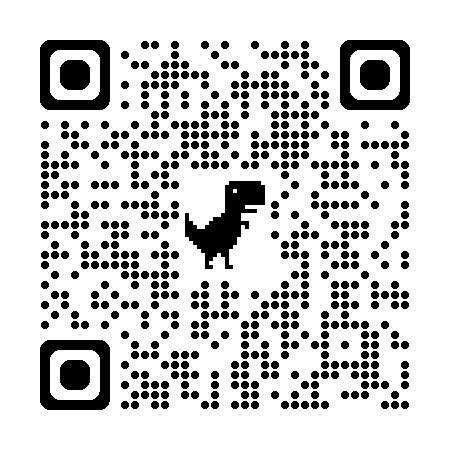
One-Day National Seminar on Artificial Intelligence and Academic Libraries: Issues and Opportunities in the 21st Century at kongu arts and science college
October 28, 2026 from 9:30am to 4:30pm
First and Largest Academic Social Network of LIS Professionals in India
During the last 2 years, there has been extensive discussion about “hijacked journals being imposed on the academic world by the huge increase in the number of bogus publishers and spurious websites”. Hijackers make money by stealing the identities of legitimate journals and collecting the article processing charges on the papers that are submitted to journals. The cybercriminals have cheated thousands of professors and Ph.D. scholars mostly from developing countries and those who were in the urgent need of publishing their articles in journals that are covered by the Journal Citation Report (a Thomson Reuters’ product). The fake journals targeted their victims using smart ideas both in web development step and victim selection.
Short- to mid-term solutions
Disclosing the unethical and criminal practices of hijacked journals and bogus publishers is the only existing action against this type of academic cybercrime. Some universities also have announced a long list of banned or black-listed journals. Unfortunately, only short-term effects are expected from these knee-jerk reactions, because they are usually based on some superficial investigation rather than on logical reasoning. The goal of a short- to mid-term strategy should be to “disseminate knowledge/awareness about such scams and to train authors so they will have the basic skills required to avoid fake publishers and hijacked journals. We have prepared the following “to-do/not-to-do” list to explain how to identify and avoid fake journals:
1. Ignore all call-for-papers solicitations emailed directly to you.
2. Do not open any unsolicited email saying that your work has already been selected for publication.
3. If a website claims to be the authentic website of a prestigious journal that is listed in an indexing or abstracting database, such as Thomson Reuters, Pubmed/Medline, Index Copernicus, Scopus, SCImago (A free access tool created by Scopus), or the Directory of Open Access Journals (DOAJ), investigate the respective websites of these databases for any link to the website of the journal and make sure they are matched.
4. In case there is no direct link from the investigated indexing portal (such as Thomson Reuters) to the journal, check the other indexing or abstracting services (such as SCImago) for any valid link to the journal’s website.
5. Evaluate the overall design of the website and check it thoroughly for any shady picture or misspelled words.
6. To an inexperienced person, all websites look legitimate; therefore, it is difficult to tell whether they are fake or real. Inexperienced authors or those who have any doubt after doing all of the recommended investigations should consult expert.
7. If someone claims she can publish your article in a prestigious journal fast, reject her offer with no doubt. One of the constant marketing strategies of the fake publishers is to do business with some people who can work for them on commission to recruit hundreds of authors for them and take their commissions.
regards,
Ajit P.
Views: 424
really use ful information
Thanks Sri Ajit P. for addressing an extremely vital issue.
Our undue craze for fame of authorship is one of the reasons for rise of these evil rackets. Many become pray to such evil activities for instant gain. I must admit that as some of the organizations (like UGC) have linked career advancement with publication of papers, people became crazy for such activities and as many of them are not intellectually capable to publish their articles in the established recognized journals, and as the established journals take time and often lag behind schedule in publishing , People requiring publication in lesser time often deceived by these rackets. So we should be more cautious. At the same time authorities should indicate certain guiding principles for publications like preparing a list of recognised journals or publication houses & societies so that writers can safely send their articles.
Sincerely,
Siddhartha S. Ray
© 2026 Created by Dr. Badan Barman.
Powered by